
Should Your Amazon Brands Use Levanta or Impact? (Finally, a Clear Answer)
Omnichannel brands are everywhere today. And in case you don’t work with one, it’s a brand that is selling across multiple channels (DTC, website, Amazon, Walmart, Target, retail stores, etc.) BUT the key is they need to have an integrated strategy where all channels work together meeting shoppers where they are when they’re ready to purchase. And in the content era (although Sora 2 will change content forever), this also means you need to meet creators where they are as well.
If you haven’t taken Sarah’s advanced course on owning affiliate marketing for publicists and PR agencies, she dives into all of the networks you need to know about. One of which is Levanta.
Levanta is an affiliate platform built specifically for marketplaces. Think of it like Impact or Rakuten, but instead of focusing on DTC websites, it is designed for brands selling on Amazon and Walmart. They launched in 2023, have raised some serious capital, to the tune of $20M, and have 6,000+ creators on the platform including profiles for some of the heavy mass media publishers we work with every day like Forbes, Hearst, BuzzFeed, and CNN.
Their biggest selling point is that they integrate directly with Amazon Attribution API, which means brands can track external traffic, offer customizable commissions (something standard Amazon Associates does not allow), and earn Amazon Brand Referral Bonus – a 10% kickback for driving sales from off-Amazon sources. Now, mass media publishers won’t use these attribution models, its just far too time intensive, but for creators, this is a great option.
But, if you’re an Impact Essentials user they’re beta testing Amazon and we can’t forget Creator Connections capabilities we discussed in this issue.
So, what’s a publicist to do? Let’s dive in.
For publicists, Levanta has been a solid option for Amazon-heavy clients who wanted better tracking and creator access than what Amazon Associates provides. Useful, but not game-changing.
Until now.
Because Levanta launched a Walmart integration earlier this year, which changes the conversation entirely for omnichannel brands.
Here’s What Actually Changed
Levanta integrated Walmart into their network. First platform to do it.
Why this matters:
Walmart is the #2 online marketplace in the US
Your creators and publishers can now push both Amazon AND Walmart links
One dashboard, one payment, cross-marketplace reporting
You can finally pitch “Available on Amazon and Walmart” and CONTROL the CPA publishers receive.
But Wait – Impact Has Amazon Now, Too?
Right as Levanta made this move, Impact started beta testing customizable Amazon commissions in their Essentials program.
So which one do you need? Because both networks come with a cost. And the answer depends entirely on your client.
When to lean into Levanta:
If the brand has a clear creator need where most sales happen on Amazon/Walmart (not DTC)
Low AOV products where basket commissions matter
You’re working with influencers and creators
You want access to Amazon’s Brand Referral Bonus (10% kickback)
When to lean into Impact:
DTC is the priority
You need Hearst, People Inc, and traditional media connections from publishers that aren’t adapting in Levanta as quickly or those that soley rely on Skimlinks
Higher AOV where DTC margins justify the focus
Is there a use case for both?
Yes, if your client does serious volume on DTC and marketplaces. Route affiliates based on where they convert best.
The Creator Marketplace Thing
Levanta has 6,000+ creators on the platform, including Forbes, Hearst, Dotdash, BuzzFeed, CNN, and US Weekly.
But here’s the question I keep getting: Do these major publishers actually use Levanta the way they use Impact or Skimlinks?
Honestly? It’s still evolving. They may be on the platform, but in my conversations, most mass media affiliate teams are deeply integrated with traditional networks and subnetworks like Impact, Rakuten, and Skimlinks. Levanta’s strength is creators and influencers, not necessarily the commerce editors you’re already pitching.
That doesn’t mean it’s not valuable. It just means you need to be clear on what you’re getting. It also doesn’t mean it won’t change, so just one more thing you need to keep your pulse on!
So, the real question… Should Your Clients Use It?
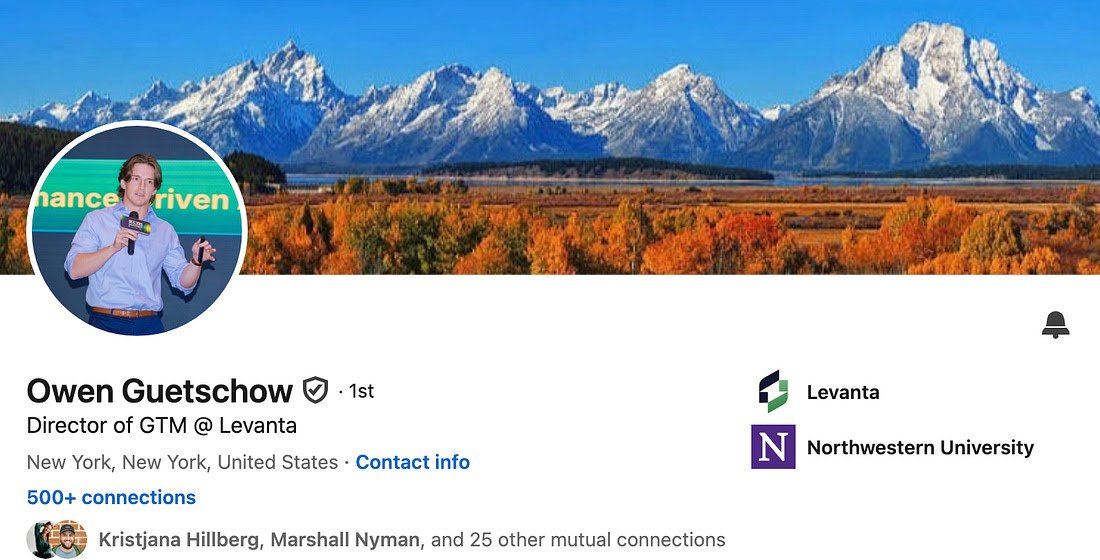
To help demystify the network and answer if your brands are a good fit, we hopped on the line with Owen Guetschow, Director of Go to Market for Levanta. He spilled some pretty incredible beans on whats coming down the pike.
Tell us about yourself.
How did you find your way into affiliate and publishing, and what excites you most about this industry?
I started out in the affiliate industry on the managed services side as an Account Associate for an Affiliate Agency (Hamster Garage). Graduating from school in 2021, all I knew was that I was interested in marketing but needed the outcomes I was driving to be tangible. Brand and creative marketing was always a bit too ethereal for me.
I hadn’t actually heard of affiliate marketing until the job hunt, but the second I found it I just had that lightbulb moment – all of these third party entities promoting brands with completely aligned incentives just makes SO. MUCH. SENSE.
And I think that is still what excites me most about the industry today. So many marketing channels that were traditionally brand or top-of-funnel focused (influencer, PR, etc.) have slowly moved towards performance-driven incentive structures which has caused the venn diagram of affiliate and all of these brand channels to become more and more of a circle. And don’t even get me started on the massive role affiliate is set to play in GEO.
What are three fun facts about you?
2025 has been the biggest travel year of my life. Thanks to a combination of work and fun I’ve managed to double my lifetime international travel in just one year. London and Shenzhen have been by far my favorites.
Despite general sports fandom being my biggest hobby outside of work, I’ve had the misfortune of rooting for Minnesota teams across the board, meaning I’ve never even sniffed a championship. I’ll let you decide whether that makes me loyal or a loser.
I’ve recently become a big Pop Punk fan. Since moving to New York a little over a year ago, I’ve found myself Neck Deep in a new favorite genre of music. Knuckle Puck and The Story So Far have been my favorite live shows so far.
Can you share a bit about your background in affiliate marketing and/or the publishing industry?
What roles or experiences shaped how you think about commerce content today?
My two stops in the affiliate industry have been in-house at an affiliate shop and now on the platform side of things. I think having touched a bit of account management and agency sales during my first stop, and now agency partnerships and GTM at Levanta, I’ve been able to build a pretty holistic foundation on the brand side of the industry.
It’s impossible to work effectively in this industry without having a baseline understanding of the publisher and affiliate side of the business. With that being said, however, I would be lying if I claimed to be anywhere near an expert. If any of you publishers reading this ever want to share your thoughts or experiences I’m always looking to learn and would be so happy to buy you a coffee (virtually or in NYC!).
Tell us about Levanta—what sets you apart from other affiliate solutions? Why should publicists and brands understand your role in the ecosystem?
First and foremost, our clear differentiator from a majority of the ecosystem is that we don’t serve DTC or Shopify – we’re entirely focused on marketplaces. If you were an Amazon or Walmart (TTS coming soon) seller all of 4 years ago, you simply didn’t have the option to run an active affiliate solution like your DTC colleagues were until Levanta came onto the scene.
Today, with this corner of affiliate marketing exploding, there are now a handful of different options for marketplace sellers to consider between. What sets Levanta apart now is three main things.
First, our product is unmatched in regards to unique features as well as overall usability and experience. Second, we’ve committed quite a bit of resourcing to Customer Success, with a full-time team of Success and Support employees dedicating substantial time to each and every client to make sure they understand the platform and industry in order to drive success. Finally, our marketplace quality is unique in the space. We’ve taken a consistent quality-over-quantity approach, hand-vetting each creator that applies to our platform and rejecting bulk-uploading high volumes of DTC partners from other platforms that aren’t such a good fit for marketplace sellers.
What’s something about your day-to-day that people might be surprised to learn? (Give a peek into the behind-the-scenes reality of your work with publishers.)
I think a major part of this industry and our day-to-day work that goes underdiscussed is just HOW MUCH has changed in the last 6 months, let alone the last 3 years. So many of both the brands and publishers we work with are underutilizing their affiliate capabilities simply because the game has been evolving constantly and drastically since its introduction just a few years ago.
Major brands and publishers may be solely utilizing Amazon Associates. They may have launched on Creator Connections with a passive campaign. They may have leveraged an Amazon Attribution campaign. They may have been using a combination of the three, and then had the entire model turned on its head following the massive policy change at the end of 2024.
As Amazon has updated their policies, offerings, rates, and even attribution models, a major part of our job here at Levanta has been not only improving and updating our platform to be compliant and integrated with all of the moving parts, but also to serve as the educator for brands and publishers who already have a million other priorities to worry about every day.
Levanta launched in 2023 – what problem were you solving for Amazon sellers that existing affiliate networks weren’t addressing?
Simply put – there just weren’t any scaled, effective affiliate networks. There were certainly a handful of adjacent tools, but previously Amazon simply wasn’t sharing the necessary data or making the appropriate APIs available to build a full-fledged, compliant affiliate platform.
Thanks to the introduction of the Amazon Attribution API and a handful of other incentives and overall changes, however, our founders saw the opportunity to build an affiliate platform and network designed specifically for Amazon sellers, and Levanta was born.
You recently raised $20M in Series A funding, right? Are you able to share where you’re investing in the platform with that capital that you couldn’t before?
While I can’t give away ALL of our secrets, I think two of the clearly defined areas that we’ve been investing in the last year or so since raising our Series A is in improving our tech and our support team. We’ve built our differentiators in the market based on leading, unique features for our clientele and far and away the largest direct, full-time support team in the Amazon affiliate industry.
Over the last year, we’ve doubled down on those two. Despite some pretty massive Amazon policy change shakeups, we’ve been able to compliantly integrate with Creator Connections to increase coverage for our clienteles, build a first-of-its-kind product sampling feature to ship influencers products directly from our platform, expand our coverage to include Walmart, and more than double the size of our Customer Success team.
Looking forward, the funding from our phenomenal partners is giving us the flexibility and leverage to continue to push the envelope and stay at the forefront of the marketplace affiliate industry.
You just launched Walmart integration – this is HUGE for omnichannel brands. Walk us through what this means for brands selling on both marketplaces. + fill us in on what we’re dying to know - Are there any other retailers on the horizon?
The Walmart integration is massive for brands. Not just in the direct sense where Walmart sellers now have access to true affiliate marketing for the first time, but as you mentioned it may have an even more outsized impact for omnichannel brands operating across marketplaces.
As Levanta continues to expand our coverage, what we’re really aiming to deliver to our users is the ability to leverage external traffic as a true brand asset. If you’re launching a new product on Walmart, or running a special Lightning Deal on Amazon, you can now leverage an entire affiliate network towards a specific SKU or marketplace. It’s really just all about adding growth levers to brands’ marketplace growth efforts.
Impact just announced they’re beta testing customizable Amazon commissions within their Essentials program. How does Levanta’s approach differ from what Impact is building?
It’s interesting. Impact is undoubtedly a leader in the affiliate platform space, and has done fantastic work in the DTC arena. I know when I used to be on the agency side of the industry I loved when our clients were on Impact, and I’m sure if given enough time and resourcing they may eventually have a very solid Amazon offering.
At this exact moment in time, however, what I’ve been hearing is that they are now essentially offering their existing tooling and affiliate marketplace to Amazon sellers. While this is absolutely a start, there are some pretty major differences between the features and marketplace makeup that are successful for DTC sellers and those that work for Amazon sellers.
One specific example being that Amazon doesn’t share first-party consumer data, meaning that many traditional loyalty/cashback/coupon partners simply can’t promote Amazon brands. This segment makes up a decent chunk of many DTC networks marketplace volume – meaning that even from the outset brands are met with clutter and confusion about who they can even work with.
Obviously, Levanta wants brands to be successful on their platform. What are the key indicators that a publicist should encourage their brands to be on Levanta and an affiliate network?
Because if we have to choose, a traditional affiliate network like Impact/AWIN would win out due to mass media publishers often requiring Skimlinks access.
First and foremost, if a brand is looking to focus specifically on their Amazon or Walmart affiliate programs (or both!), that’s far and away the best indicator that they’re a fit here. At the cost of tooting our own horn for a second, there’s a reason we’re the premier marketplace affiliate platform and consistently see our brands drive outsized revenue performance.
More specifically, however, we see a few key indicators consistently leading to success:
Product Price Point: Amazon isn’t always as margin-friendly as your DTC channel may be, and as such it’s incredibly difficult for products below $20-$30 to offer commissions that are competitive and move the needle while maintaining profitability.
Brand Maturity: Levanta is not the cheapest platform on the market. We are the premier option, and our software and marketplace reflects that. While we offer pricing plans for brands of all sizes, those that have the resources (time and expertise) to leverage the tool, features, and marketplace to the fullest extent consistently see the best results.
Comprehensive Coverage: A brand who is looking to leverage ALL models is going to be able to scale much more effectively on Levanta as we’ve designed our platform to allow brands and affiliates to manage and optimize their program cross-model and -marketplace from one, centralized hub.
Product Vertical: This rings true across affiliate marketing, but is particularly true on Amazon where affiliate coverage is much more content heavy. Your product has a much higher chance of being successful if there’s high consumer consideration. If audiences aren’t searching for reviews, content, or opinions on your product or vertical, they’re not going to come across the content our affiliates are producing.
Finally, on the point of the mass media publishers gravitating towards the traditional networks, I’m happy to report that that’s never a problem we’ve had to face. Mass Media Publishers work both within the traditional networks and through Levanta to ensure they have comprehensive coverage across DTC and marketplaces, which is why our brands have always had access to the major media publishers in the space.
It’s never been a question of choosing one or the other, brands have been able to leverage the traditional platforms for DTC and then launch with Levanta to maximize their scale and efficiency when opening up their Marketplace affiliate coverage.
What This Means for You
Stop defaulting to one network for every client.
The landscape has shifted. Publishers want options. Brands need flexibility. And as publicists, we need to understand when to recommend what. Audit your current clients.
Ask:
Where are most of their sales happening?
Are they on Walmart? Should they be?
Are they working with creators or just pitching traditional media?
Are TikTok Creators paramount to their strategy?
Then match the tool to the strategy.
Bottom Line
Levanta isn’t replacing Impact. It’s solving a different problem for a different type of brand. But with Walmart integration and a creator-first approach, it’s worth knowing when to recommend it. Because the publicists who get this right? They’re the ones proving ROI and keeping clients long-term.
Questions about Levanta vs. Impact for your clients? Hop over to Substack and let’s chat!
